
ID.20190206.MANUMANU Spotting Scope2019
A spotting scope for birdwatching with built-in species ID and a companion app. Bachelor's thesis in industrial design.
I was looking for a subject I knew nothing about, something to do with nature and sustainability. Birdwatching fit: a hobby that doesn’t intrude on nature, and a bit like Pokémon, only in real life. Bachelor’s thesis in industrial design at the Bergische Universität Wuppertal. Long-range optics and ornithology were both new to me, so the first part of the work was learning them.
I talked to salespeople in four optics and outdoor stores, to the head of training at Zeiss in Wetzlar, to a NABU warden who had spent the season on the island of Trischen, and to a hobby birder at Schloss Dyck. I also used the scopes myself, from a 50 € model at a pond at dusk to a 3,495 € Zeiss.
The answers pulled in two directions. The people selling scopes said customers don’t want technology inside them: a scope is bought once in a lifetime and shouldn’t go out of date. Zeiss had built an integrated digital system that was already outdated when it reached the market. At the same time, logging sightings was what everyone complained about, the online portals were hard to use, and photographing through a scope with a phone was fiddly and left heavy vignetting. And everyone wanted to carry less.
The market had room at the bottom. Below 300 € the scopes were poor, and the amateur and pro segments above were full. None of them came in a strong color or a simple, calm form.
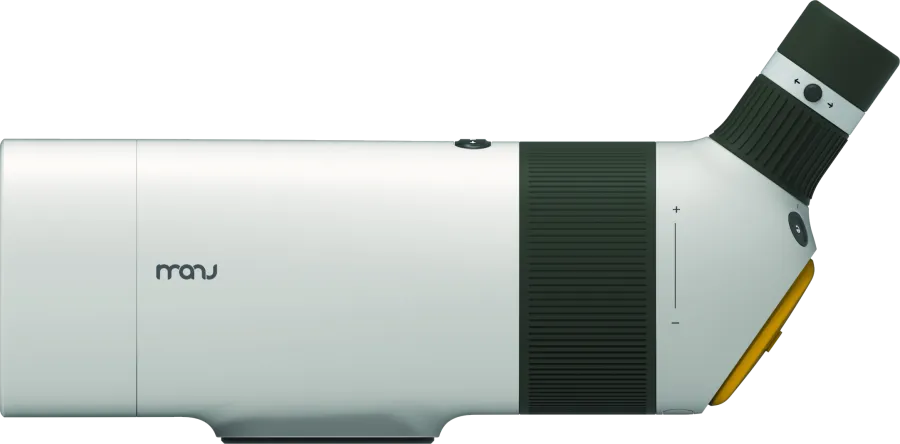
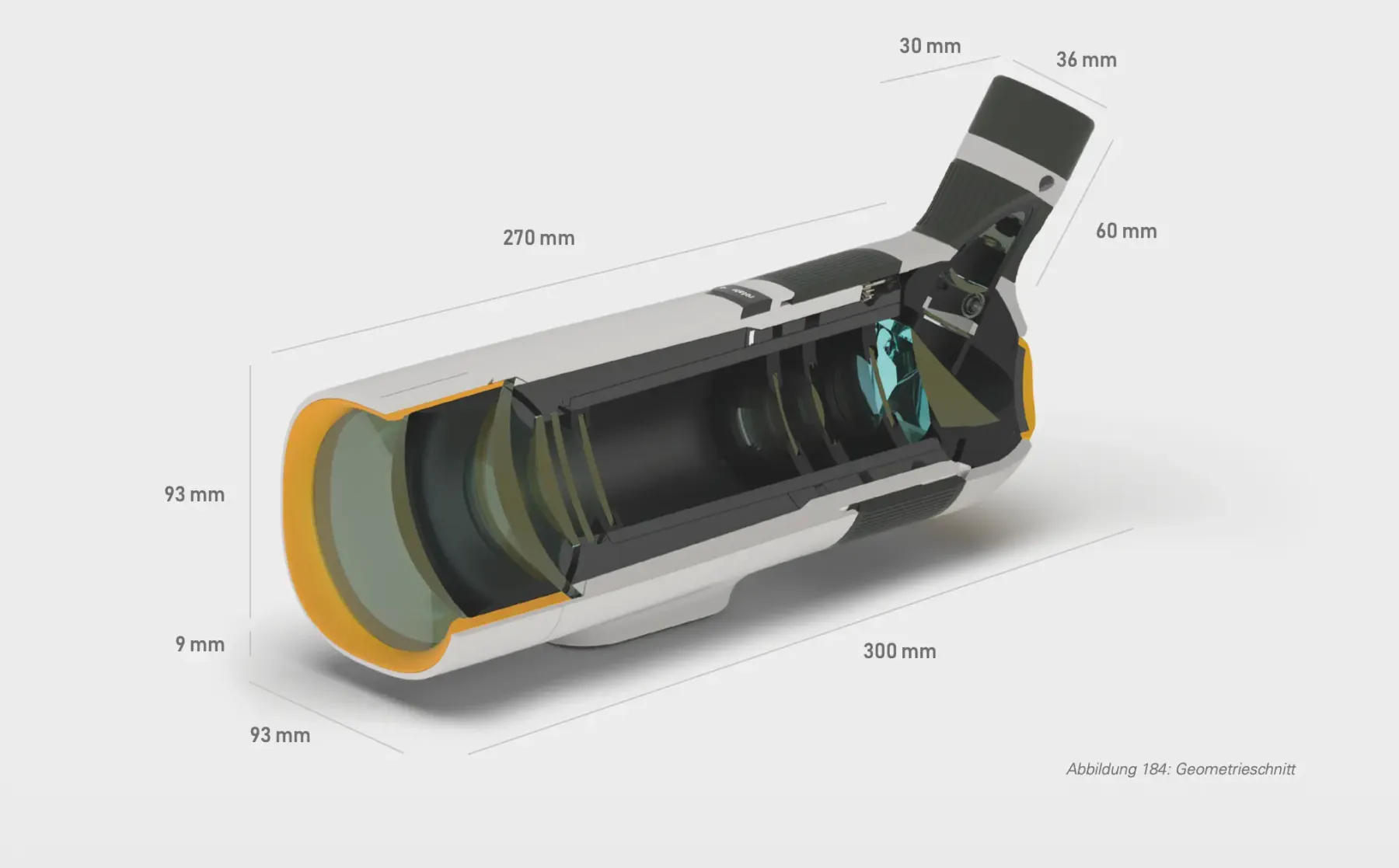
I worked through five overall concepts: a phone built into the body, a modular system, everything integrated, a clip-on that recognizes birdsong, and a body that turns the phone into position. A built-in phone or built-in electronics would age as fast as the technology inside. The modular system answers what the Zeiss trainer said: the optics stay, and the technology sits in a module at the back that can be swapped or upgraded later. The base version is a plain prism and works without any power. It was meant to cost under 300 €, with an 80 mm objective and 20–60x zoom.
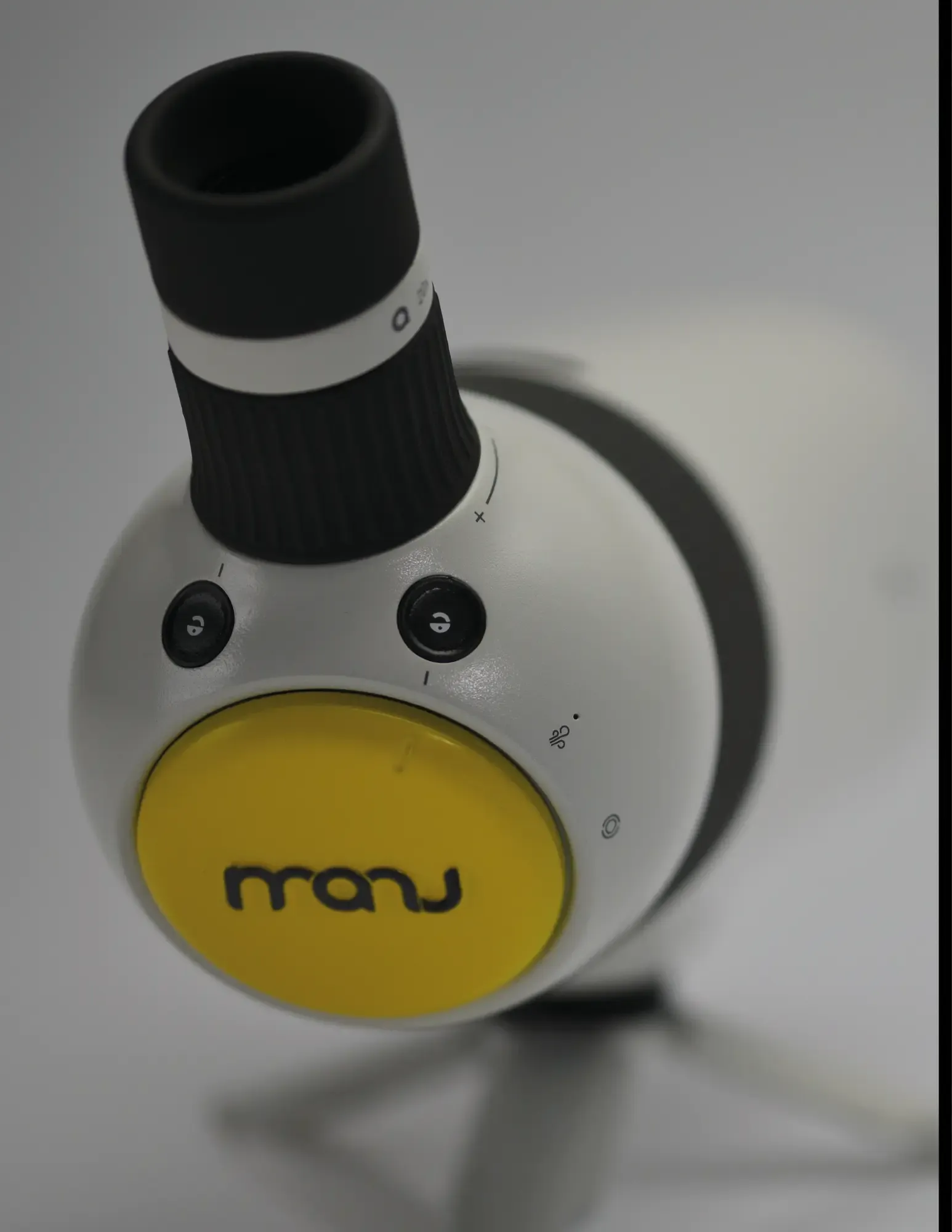
Three forms made the final round: Ergo, Dive and Tube. Tube won, with the squircle cross-section taken over from Ergo, a strong contrast to existing scopes. The body is round because turning controls cause the least shake. I tested proportions and buttons with people with different hand sizes, first as CAD models, then as 3D prints.
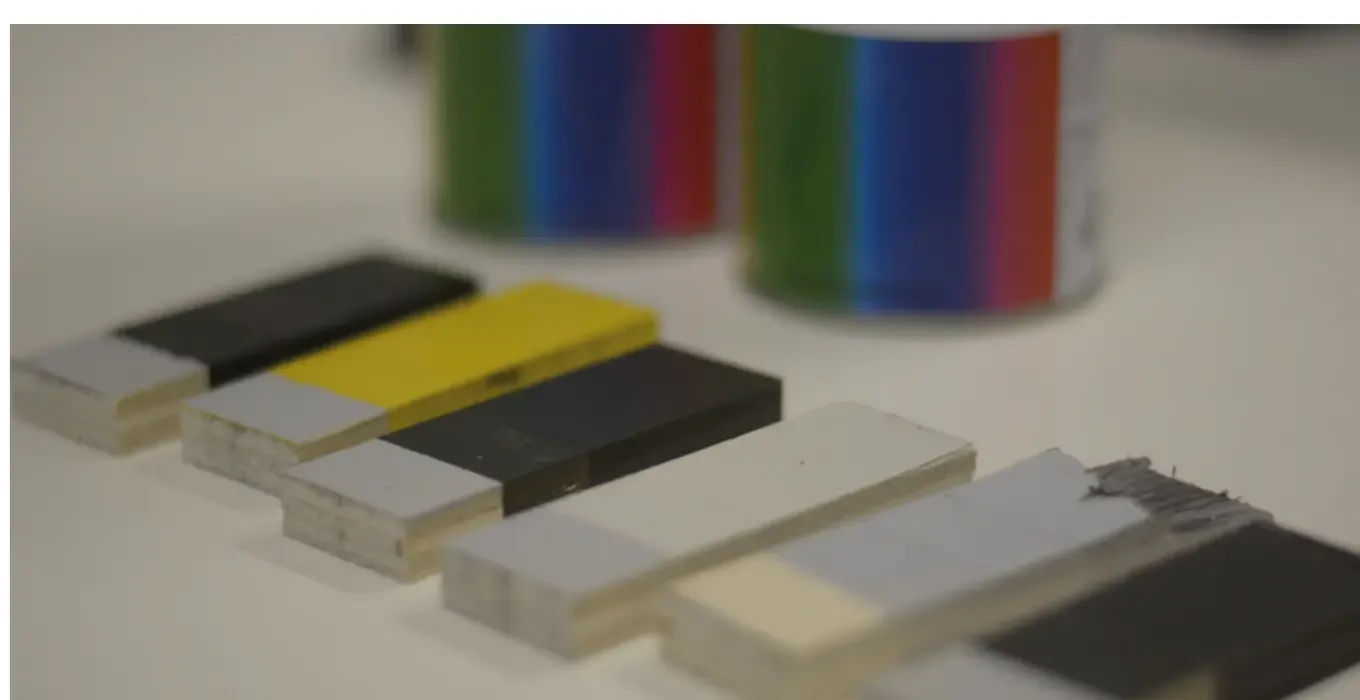
Dark colors looked too professional, outdoor colors already existed, and trend colors don’t last. So the body is a warm white, picked by testing it outside in different light, with a dark gray-green where hands touch it and yellow as the one pop color, on the module, the lens cap and a ring on the sun shade. I tried natural materials too, but they wear out too fast outdoors.
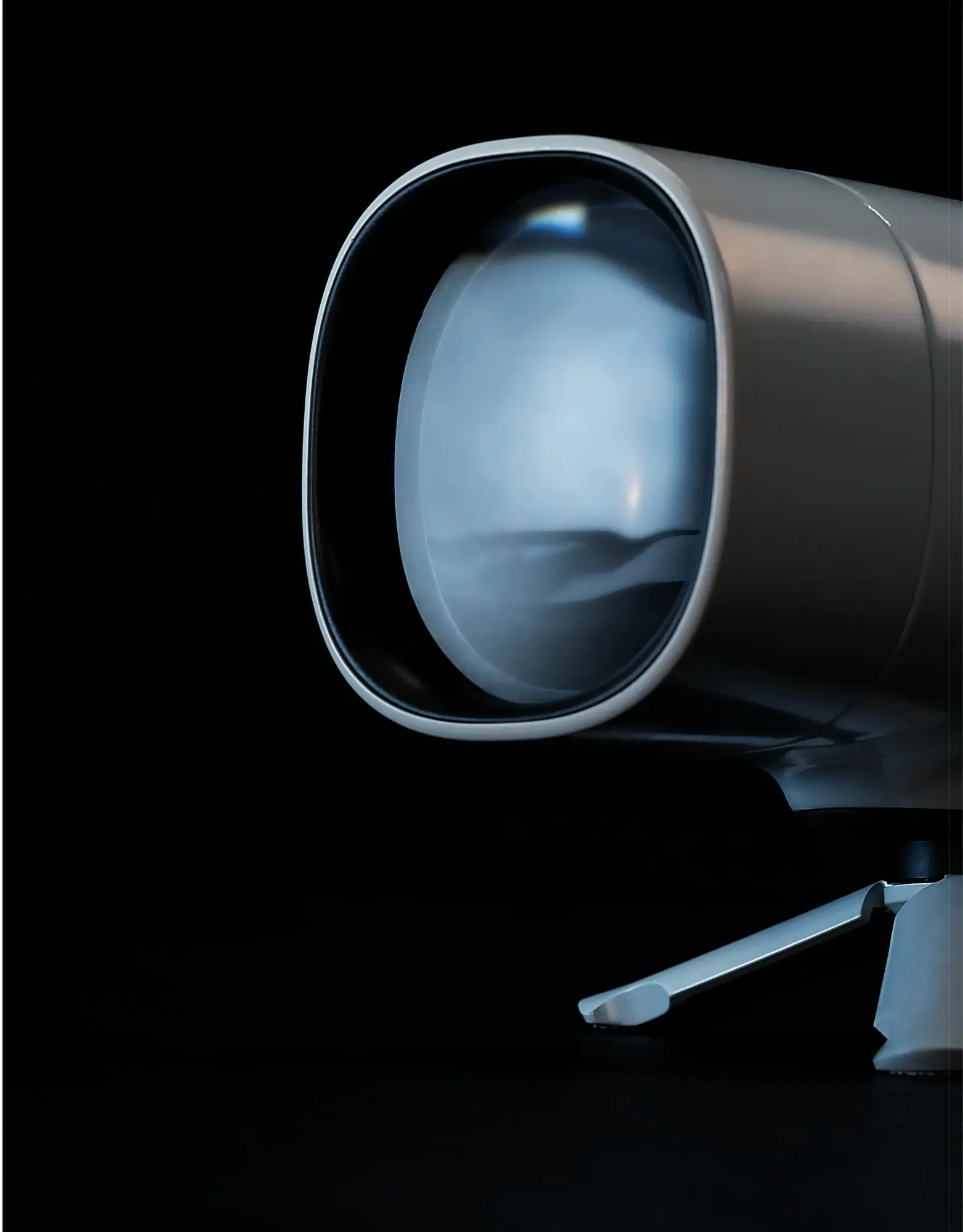
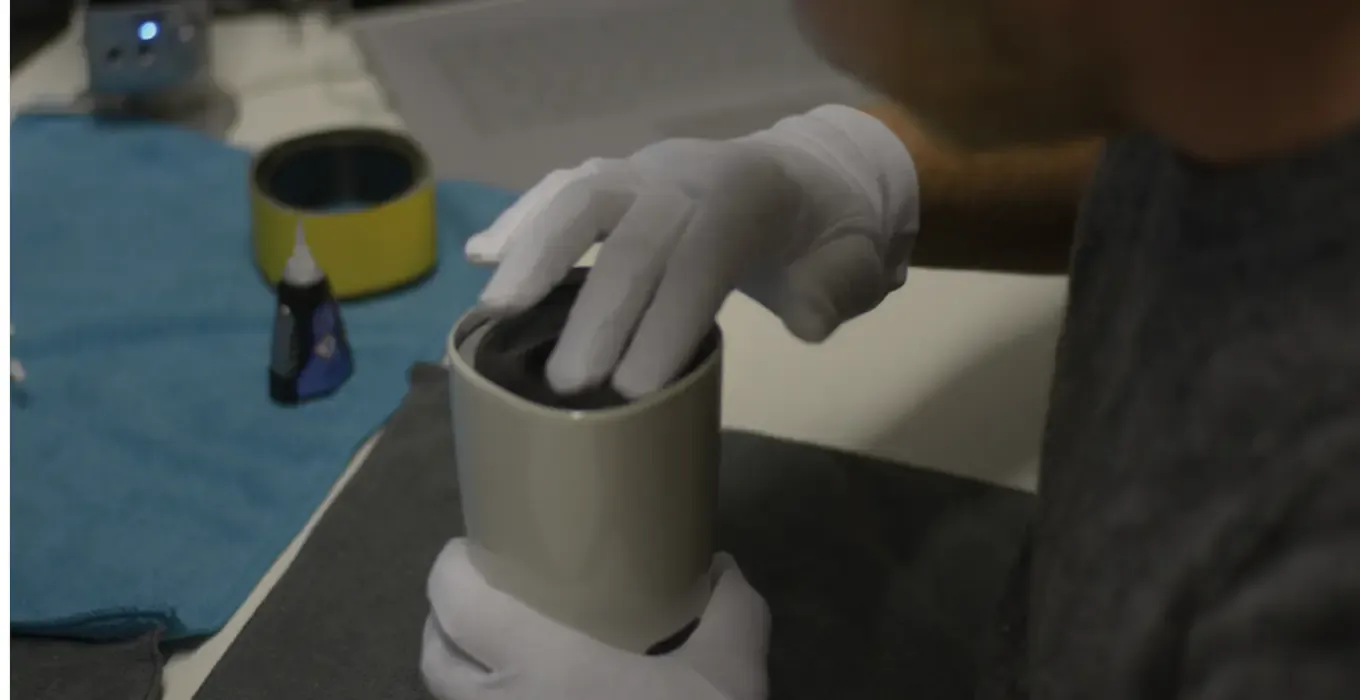
The hardest decision was to do the form-finding itself in 3D print instead of settling it on screen first. Parts were printed, painted with car paint, assembled, corrected and printed again, in rounds as quick as I could make them; some prints ran for more than two days. The lenses were milled from extruded acrylic, then sanded and polished. What came out at the end is an appearance model, not a working scope.
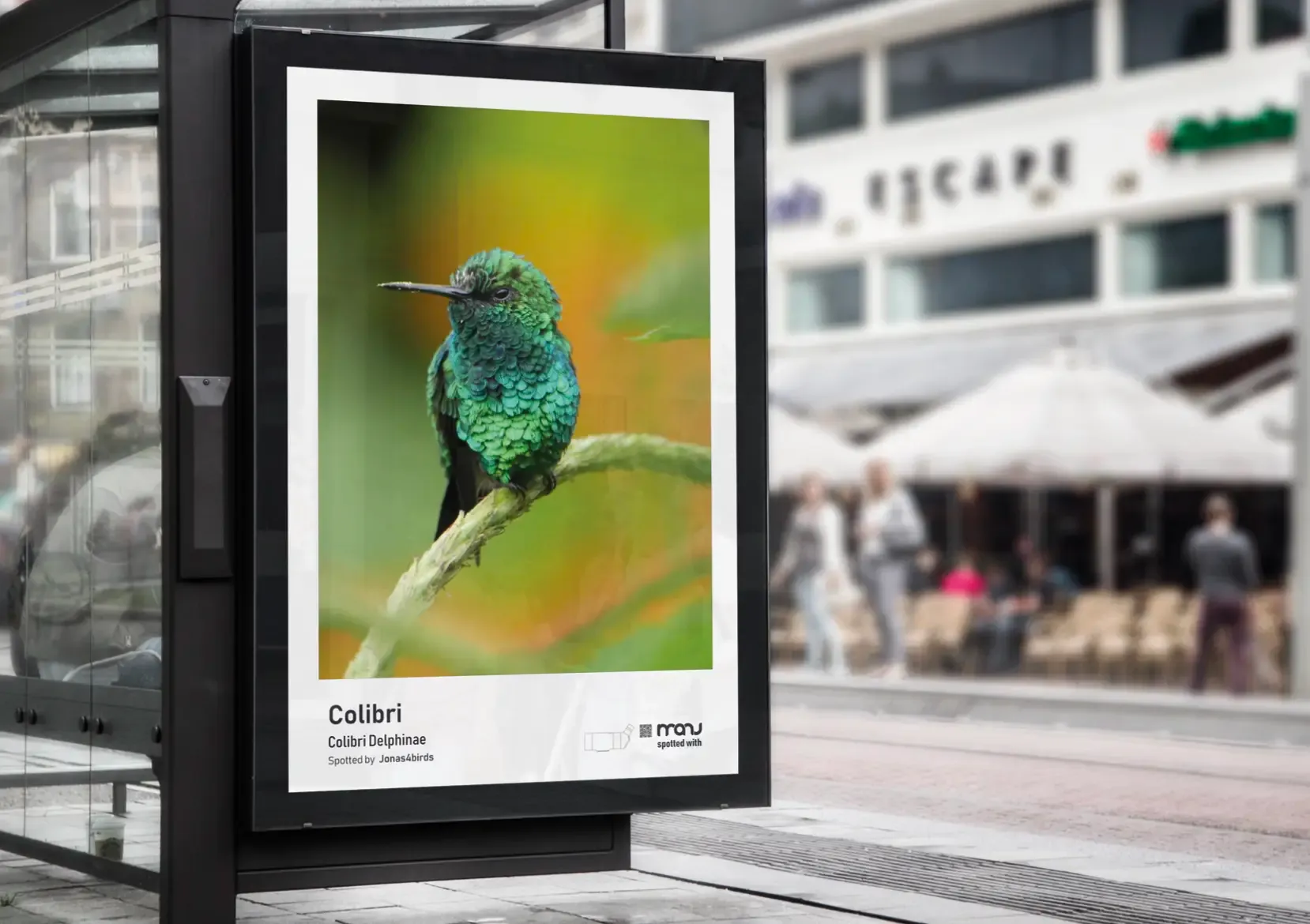
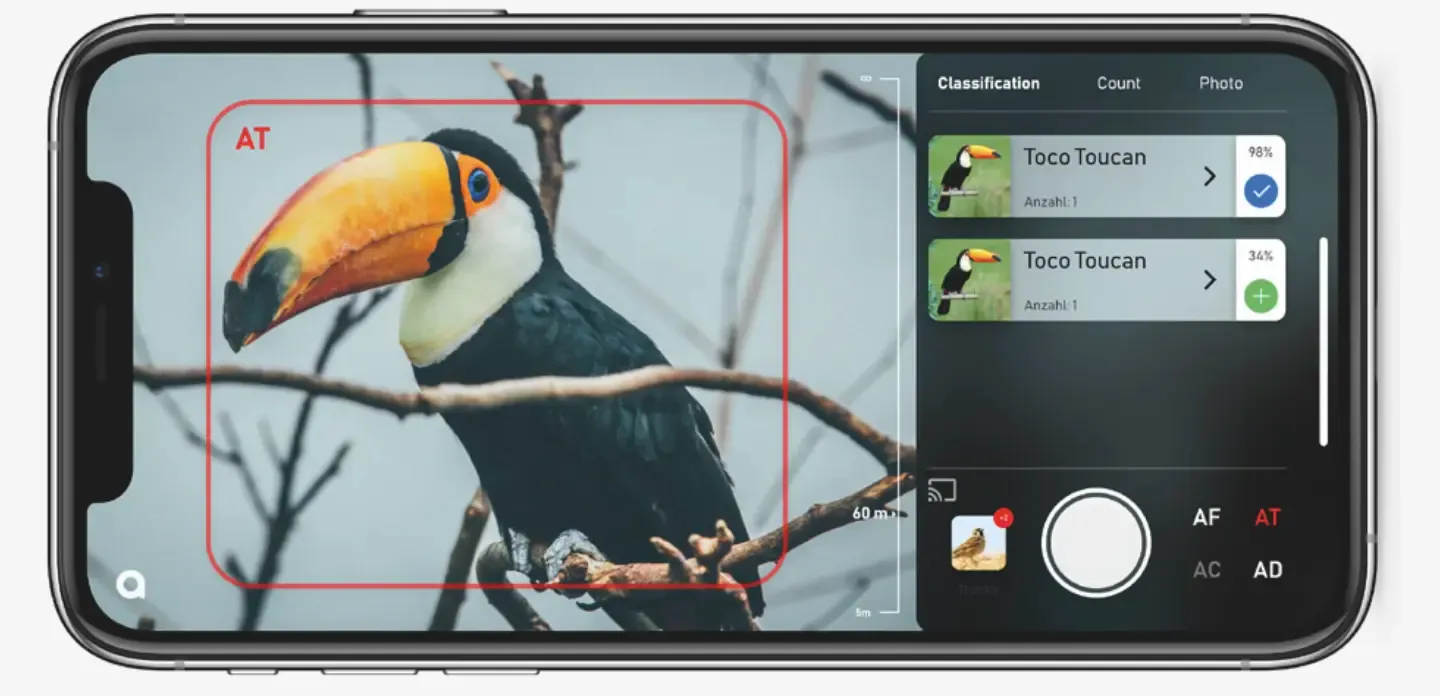
The scope connects to an app: the camera recognizes the species right in the viewfinder and shows how sure it is as a percentage. Sightings can be collected into trips, with photos, a species list and counts, and shared one by one. The free app was meant as the way in, before anyone buys a scope. The name comes from the Māori word for bird.
The modules are set as a principle, but what each one does in detail isn’t worked out. Swapping a module opens up the optics to dust and moisture, and I didn’t solve that. The technical layout inside is an approximation, enough to show that it could be built.